What Brands Can Learn from Birthday Emails: A Real-World Analysis
Summary: Birthday emails are one of the simplest lifecycle moments a brand can activate, yet many still underuse them. I analysed the messages that landed in my inbox around my own birthday and found three dominant plays, discounts, loyalty rewards, and emotional storytelling. The standouts do three things well, they show up early, make redemption effortless, and treat the moment as relationship-building rather than a one-day promo push.
Published: Mar 16, 2026
Author: Pavel Los, a loyalty and CRM practitioner with 20+ years in marketing and loyalty, leading large-scale programs across local and international environments (including Shell and Oracle).
I help brands audit, redesign, and activate loyalty programs—improving time-to-value, engagement loops, and measurable ROI through practical frameworks, workshops, and hands-on consulting.
Why birthdays matter in loyalty
I recently celebrated my birthday and, like many consumers, my inbox quickly filled with birthday emails. On the surface, these messages look simple, a warm wish and a small gift. In practice, they are a high-permission moment where brands step into a customer’s personal calendar.
Handled with care, birthday communication can feel genuinely welcome. It can create a small "Moment of Magic", lift engagement, and generate incremental revenue. Handled poorly, it lands as just another voucher in a crowded inbox. So what separates the memorable from the forgettable?
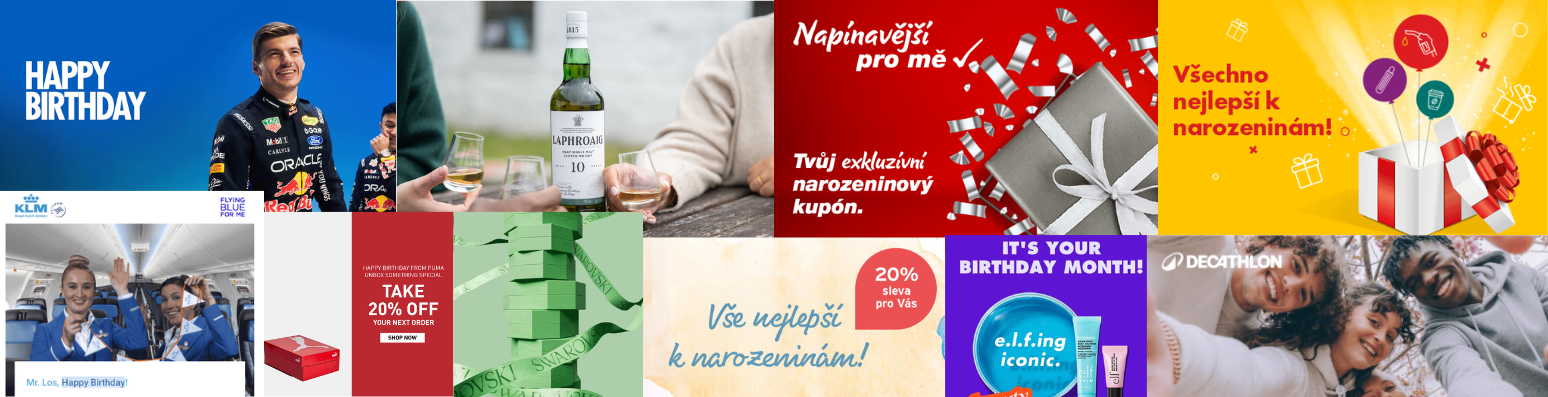
To understand how brands approach this opportunity, I reviewed birthday emails I received from companies across retail, travel, sports, and lifestyle. The sample included KiK, Kiwi.com, Swarovski, Tchibo, Shell, Decathlon, Red Bull Racing, Laphroaig, e.l.f. Beauty, PUMA, and KLM.
The three birthday email strategies brands use
Across the messages, most brands fall into one of three strategic categories, transactional discounts, loyalty programme activation, or emotional storytelling. Each can work, but each creates a different kind of value.
1) Transactional discounts
The most common approach is a straight purchase trigger, give customers a discount and invite them to buy now.
Examples from the inbox:
- KiK - 20% off a single product, redeemable in store.
- Swarovski - 20% off a purchase, valid for three months.
- Tchibo - 20% off plus a free coffee in store.
- kiwi.com- 240 CZK off travel bookings above 4,900 CZK.
- PUMA - a 20% discount code for the next online order.
This model is straightforward and often effective for short-term revenue. The risk is that it shrinks the birthday into a promo mechanic. Discounts are appreciated, but on their own they rarely build emotional attachment.
2) Loyalty programme activation
A second group uses birthdays to pull members deeper into the loyalty ecosystem. Instead of a generic code, the brand rewards participation through points, credits, or account benefits.
Examples from the inbox:
- Shell ClubSmart - double loyalty points for fuel purchases during the birthday month.
- Decathlon - a 200 CZK gift card redeemable within a defined time window.
- Red Bull Racing - loyalty points and a 20% merchandise discount for members of its fan programme.
This approach tends to feel more "on-brand" for loyalty because it reinforces programme value. It also creates a clearer path to repeat behaviour, especially when the experience is Simple, Personal, and Valuable (SPV).
3) Emotional storytelling
The rarest approach focuses less on incentives and more on identity. Instead of leading with value, the brand celebrates the customer relationship.
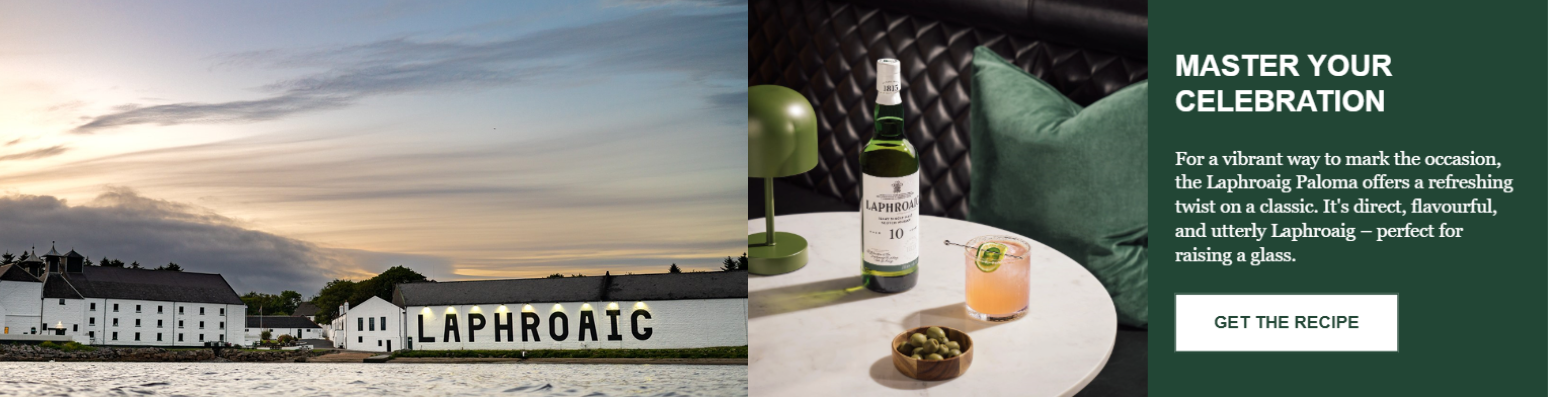
The clearest example here was Laphroaig. Rather than starting with an offer, the message connected the birthday to the brand’s character, individuality, and sense of belonging. The result felt more like a note than a campaign.
Timing matters: who owns the birthday moment?
Most brands send one email on the day itself. A few extend the window, and that is where advantage appears.
What stood out:
- Tchibo sent a message several days before the birthday to introduce the offer.
- e.l.f. Beauty communicated across the birthday month and used reminders to drive redemption.
- Laphroaig reached out before the day, building anticipation before the inbox became crowded.
Early outreach can feel less transactional and more thoughtful. It also helps your message arrive when attention is still available, not when it is competing with ten other brands.
A softer play: KLM’s human touch
KLM took a different path. Instead of an incentive, the airline thanked the customer for flying with them and simply wished a happy birthday. The message was signed by members of the airline team, cabin crew, engineers, and operations staff.
In categories where loyalty is built on trust and long-term confidence, that warmth can be more valuable than a short-term discount.
Redemption friction: the hidden loyalty tax
A birthday reward only works if it is easy to understand and easy to use. Every extra step adds a friction tax, and friction kills conversion.
- Low-friction examples:
- Decathlon used a straightforward gift card.
- Swarovski provided a clear promotional code.
- PUMA delivered a simple online discount code.
Shell’s double-points mechanic was less clear. Shell offered double loyalty points for fuel purchases, but despite having worked on the program myself for many years, I found it difficult to understand what happened after redeeming the offer. That is a warning sign, if an expert hesitates, a typical customer will drop.
The simplest rule of thumb, if you need to explain redemption in more than three short lines, simplify it.
The personalisation gap
Most birthday emails used my name, but very few used meaningful behavioural data. No tailored product picks, no category-based gift, no tier-aware message. That is a missed opportunity because birthdays are an ideal trigger for relevance.
Three easy upgrades:
- Recommend one item tied to recent purchases, or browsing history.
- Tailor the reward to the member’s value, tier, or favourite category.
- Reference a shared milestone, for example "one year since you joined", to make the relationship feel real.
Silence is also a signal
One surprising outcome was how many brands stayed silent.
I am, admittedly, somewhat “professionally distorted” when it comes to loyalty programmes. Over the years I have joined a very large number of them across airlines, retailers, hotels, sports brands and digital services, yet only a small subset reached out.
The reasons are usually practical, not strategic. Date-of-birth data is missing, trapped in a CRM, or not connected to automation. Campaign ownership is unclear. Or teams avoid messaging because they cannot deliver something meaningful.
Still, the signal matters. A birthday is one of the most predictable lifecycle triggers available. If customers share that data, they are giving permission to acknowledge it. Not showing up leaves value on the table, and it leaves warmth on the table too.
So what should brands do next?
Here are five actions to improve birthday communication without turning it into a bigger project than it needs to be.
- Treat birthdays as a relationship moment. Lead with warmth, then earn the right to sell. Ask, what would make this feel personal, not automated?
- Show up early. Test a "pre-birthday" touchpoint to build anticipation and reduce inbox competition.
- Design for SPV. Keep it Simple, Personal, and Valuable. If the benefit is unclear, the moment is wasted.
- Remove the friction tax. Shorten instructions, reduce steps, and make redemption feel effortless across channels.
- Use the data you already have. Purchase history, tier, favourite categories, and engagement are all signals you can turn into relevance.
Reflection questions to take into your next lifecycle review:
- Does our birthday message create a Moment of Magic, or does it read like a campaign?
- Could a customer understand and use the reward in under 30 seconds?
- Are we rewarding behaviour and relationship, or only trying to trigger a purchase?
- Who owns birthdays internally, and what would stop this from running reliably every day?
Closing thought
The brands that stand out treat birthdays as more than a line in a calendar. They use them to signal attention, reduce friction, and deepen belonging. If your customers give you their birthday, you have already been invited, the question is how you show up.